

How to Preserve Your Grandparents’ Stories for Future Generations
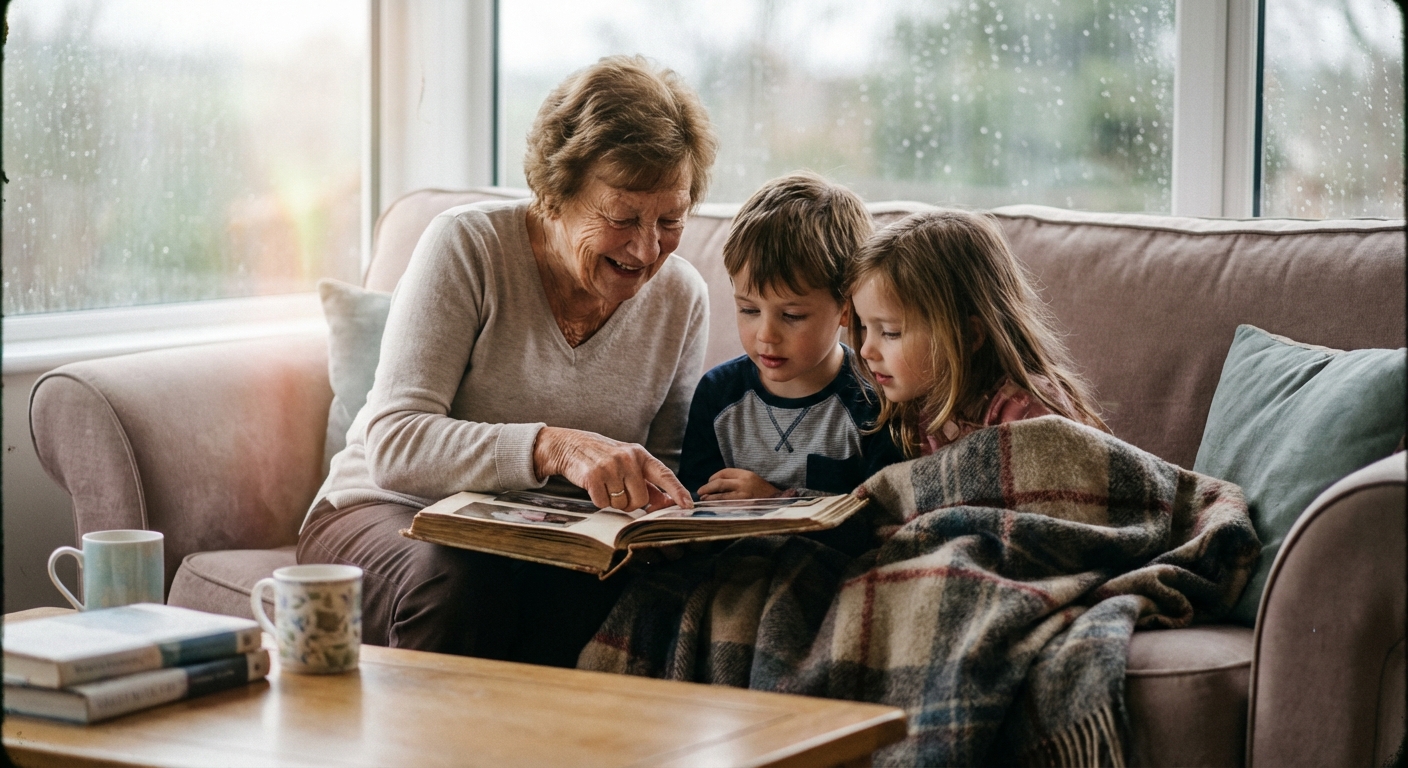
Your grandparents carry entire worlds inside them – decades of everyday moments, hard-won lessons, family traditions, and quiet adventures that no history book will ever record. The way your grandmother describes the smell of her mother’s kitchen, or the way your grandad laughs when he tells you about his first job – these details are irreplaceable.
Preserving their stories isn’t a chore or a duty. It’s one of the most rewarding things you can do together. You get to hear their lives in their own words, and they get to feel that their experiences genuinely matter to someone. Which, of course, they do.
This guide walks you through practical ways to capture, preserve, and share your grandparents’ stories – no special equipment or expertise required.
Recording Their Stories
The best recording method is the one your grandparents feel comfortable with. Some people light up in front of a camera; others prefer a quiet chat with no devices in sight. Here are three approaches, each with its own strengths.
Audio Recording
Audio is often the easiest place to start. There’s no camera to make anyone self-conscious, and you can set a phone on the table and almost forget it’s there.
What you need:
- A smartphone with a voice recording app (Voice Memos on iPhone; most Android phones come with a built-in voice recorder app)
- A quiet room with minimal background noise
- A cup of tea and an unhurried afternoon
Tips for good quality:
- Place your phone between you, screen-down, about 30cm from your grandparent
- Avoid rustling, tapping, or clinking near the phone – microphones pick up surface noise
- Record in shorter sessions (30-45 minutes) rather than one marathon sitting – it’s less tiring for everyone
- Do a quick test recording first and play it back to check the volume is clear
The beauty of audio is that it captures how someone tells a story – the pauses, the laughter, the way they say “well, you see, what happened was…” before launching into something wonderful.
Video Recording
Video adds another layer: facial expressions, hand gestures, the way your grandad raises an eyebrow when he’s about to say something funny. If your grandparents are comfortable with it, video creates recordings that future generations will treasure.
Simple setup:
- Use a phone or tablet propped on a stack of books – no tripod needed
- Face a window so natural light falls on your grandparent’s face (avoid having the window behind them, which creates a silhouette)
- Frame from the chest up so expressions are visible
- Record in landscape mode (phone sideways) for a more natural look
Video works especially well when your grandparents are showing you something physical – a photograph, a recipe card, a piece of jewellery with a story behind it. “This ring was your great-grandmother’s. She wore it every single day, even when she was gardening…”
Written Notes
Some grandparents simply don’t want to be recorded, and that’s completely fine. Taking notes during or after a conversation is a perfectly valid way to preserve their stories.
How to make it work:
- Jot down key phrases and details during the conversation – you don’t need to transcribe everything in real time
- Write up your notes within 24 hours, while the details are still fresh
- Include direct quotes where you can – their exact words carry more personality than a summary
- Note sensory details they mention: smells, sounds, textures, colours
You might also consider writing up the conversation as a short narrative afterwards, weaving their words into a readable account. This can become the foundation of a written biography – a lasting gift for your whole family.
Choosing a Preservation Format
Once you’ve captured the stories, you’ll want to store them in a way that lasts and that other family members can actually access.
Digital Archives
Digital is the most practical option for long-term preservation.
- Cloud storage (Google Drive, iCloud, Dropbox) keeps files safe even if your phone or laptop fails
- Organise by person and topic – create folders like “Grandma Jean – Childhood” or “Grandad Tom – Working Life”
- Use clear file names with dates: “2026-02-grandma-jean-school-memories.m4a”
- Back up in at least two places – cloud storage plus an external hard drive is a sensible combination
If you’ve made audio or video recordings, consider creating a simple written summary or transcript alongside each file. This makes it far easier to find specific stories later without listening through hours of recordings.
Physical Formats
There’s something special about a physical object you can hold and pass around.
- Photo books with stories: Services like Blurb, CEWE, or Mixbook let you combine photographs with written narratives. A photo of your grandmother as a young woman paired with her own account of that period is extraordinarily powerful.
- Printed transcripts: Even a simple printed document, bound or placed in a folder, becomes a family keepsake.
- Memory boxes: Combine printed stories with small physical items – postcards, letters, recipes written in their handwriting.
Written Biography
If you’d like to go further, you can shape your grandparent’s stories into a written biography – a narrative account of their life in their own words. This doesn’t need to be a published book; even a printed booklet shared among family is a meaningful legacy.
For a step-by-step guide to writing one, see How to Write a Family Biography.
Sharing Stories with Family
The best way to preserve family stories is to make sure other people can actually find and enjoy them. Here are a few ways to make your grandparents’ stories accessible to the wider family.
- Create a shared folder (Google Drive or Dropbox) and invite siblings, cousins, aunts, and uncles – give everyone access to listen, read, and add their own recordings
- Start a family group chat or email thread where you share one story at a time – a short clip or a written anecdote every week or two keeps people engaged without overwhelming them
- Make copies of physical items – if you’ve printed a photo book, order a second copy for another branch of the family
- Involve the next generation – if there are younger children in the family, share age-appropriate stories with them. Children love hearing about what life was like “in the olden days”, and it builds connections across generations
- Consider a family gathering where you play a recording or read a story aloud – holidays, birthdays, or anniversaries are natural moments for this
The goal isn’t to create a polished archive that sits untouched on a shelf. It’s to keep these stories alive in the family’s everyday life.
Starting the Conversation
The hardest part is often simply beginning. You might worry about asking the wrong thing, or your grandparent might not think their life is interesting enough to record (it is – it always is).
A few tips to get started:
- Begin with something specific, not “tell me about your life.” Try “What was your school like?” or “How did you and Grandad meet?”
- Listen more than you ask – let them wander. The digressions are often the best bits.
- Bring a prompt – an old photograph, a family recipe, a place name. Physical objects unlock memories.
- Keep it relaxed – this is a conversation, not an interview. If they drift off-topic, follow them.
For a detailed guide on how to approach these conversations with warmth and sensitivity, see How to Interview Your Parents About Their Life. For questions designed specifically for recording, see Best Questions for Recording Family History. And for 50 conversation starters, see our list of questions to ask your grandparents.
Every Small Step Matters
You don’t need to record your grandparents’ entire life history in one sitting. A single 20-minute conversation, a handful of written notes, one story saved to your phone – each of these is a small act of preservation that adds up over time.
What matters is that you start. Ask one question. Press record. Write down one memory. The stories are there, waiting to be heard, and your grandparents will almost certainly be glad you asked.
Preserving their stories is, at its heart, an act of love – a way of saying “your life matters to me, and I want the people who come after us to know you too.”
Willow helps you record and preserve family stories together. Start your free trial – no credit card required.